Poems vs Songs
Poems and songs are similar in that both are powerful forms of artistic expression, with the key difference being that songs incorporate music.
Both forms of art aim to draw out emotions and deep-rooted feelings, and they both tell stories and communicate thoughts through their words or
lyrics. Their structure on paper also display similarities between the two work types. For example, pauses between stanzas in poems are able to
visually represent the pauses heard in songs or to tell a person when the singer is moving to the next verse of the song. Repetition is also used
in both poems and songs, but in different ways. Songs use melodies and instruments to carry their lyrics in a musical way, and poems use literary
devices like alliteration and rhyming to convey a sense of musicality within the format.
Furthermore, both songs and poems may communicate their message or themes through devices like symbolism, metaphors, similes, imagery, hyperbole,
and many more. These elements are helpful when it comes to individuals painting a picture in their head so that the idea is easier to grasp. This
can also simplify complex/abstract ideas down so that they are more relatable to the person experiencing it, and it's easier for them to connect
emotionally. Sometimes it can be difficult trying to pick up on the hidden meanings in these art forms, so it's important to take note of these
several elements when listening to a song or reading a poem.
|

|
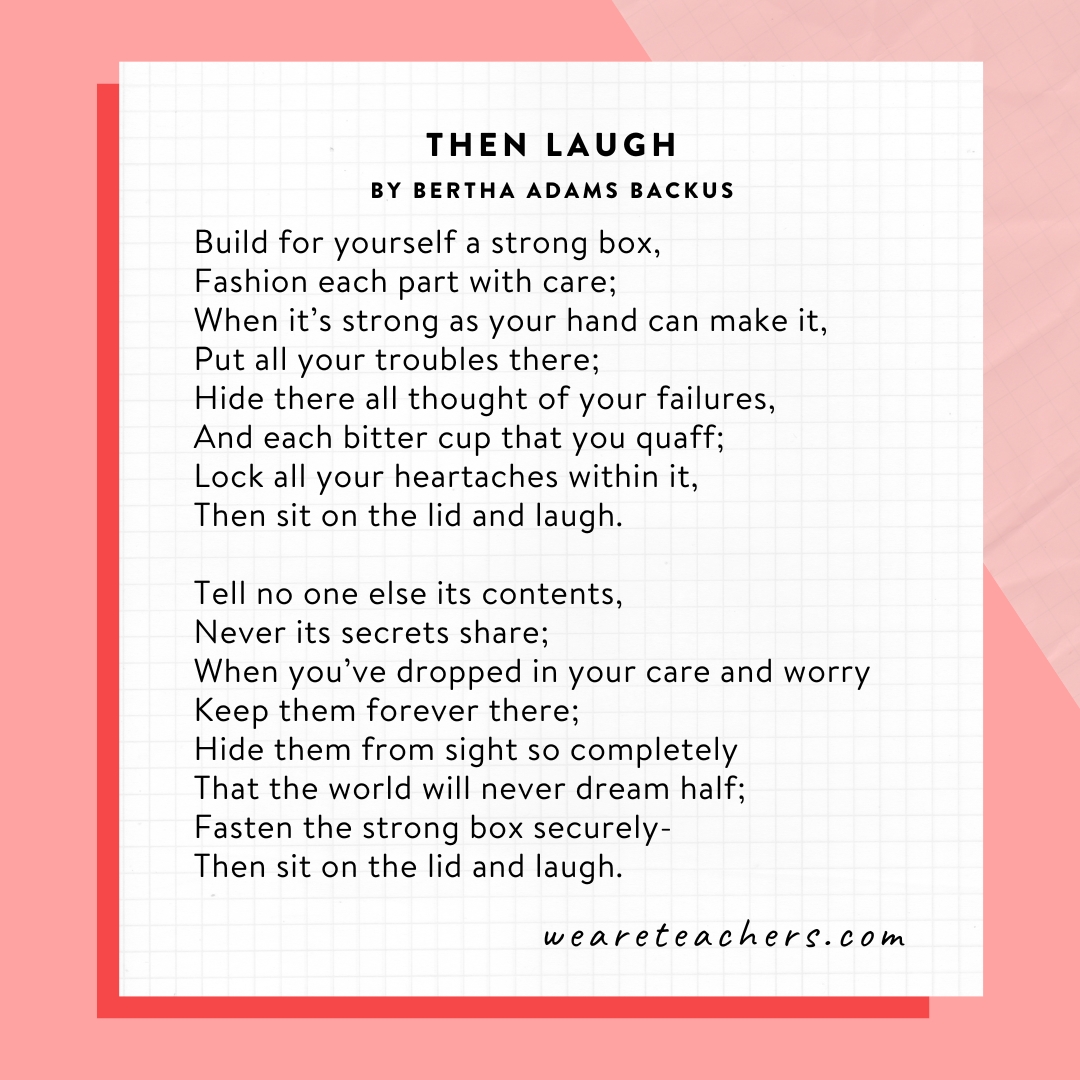
This is a poem by Bertha Adams Backus called Then Laugh. The main purpose for the poem is to convey the deep resilience of the human spirit despite life's many hardships and challenges. In addition, it suggests that the reader should use laughter as healing response, while making sure they don't just avoid their problems altogether. |
This is a famous poem by Robert Frost called Nothing Gold Can Stay. It reflects the fleeting nature of youth and innocence as its main theme throughout. This idea is not expressed simply, however. There are several elements of imagery, metaphors, and symbolism to convey this theme. For example, the metaphor of early spring leaves, which turn from golden to green, symbolize how the moments of innocence can be short-lived. |